
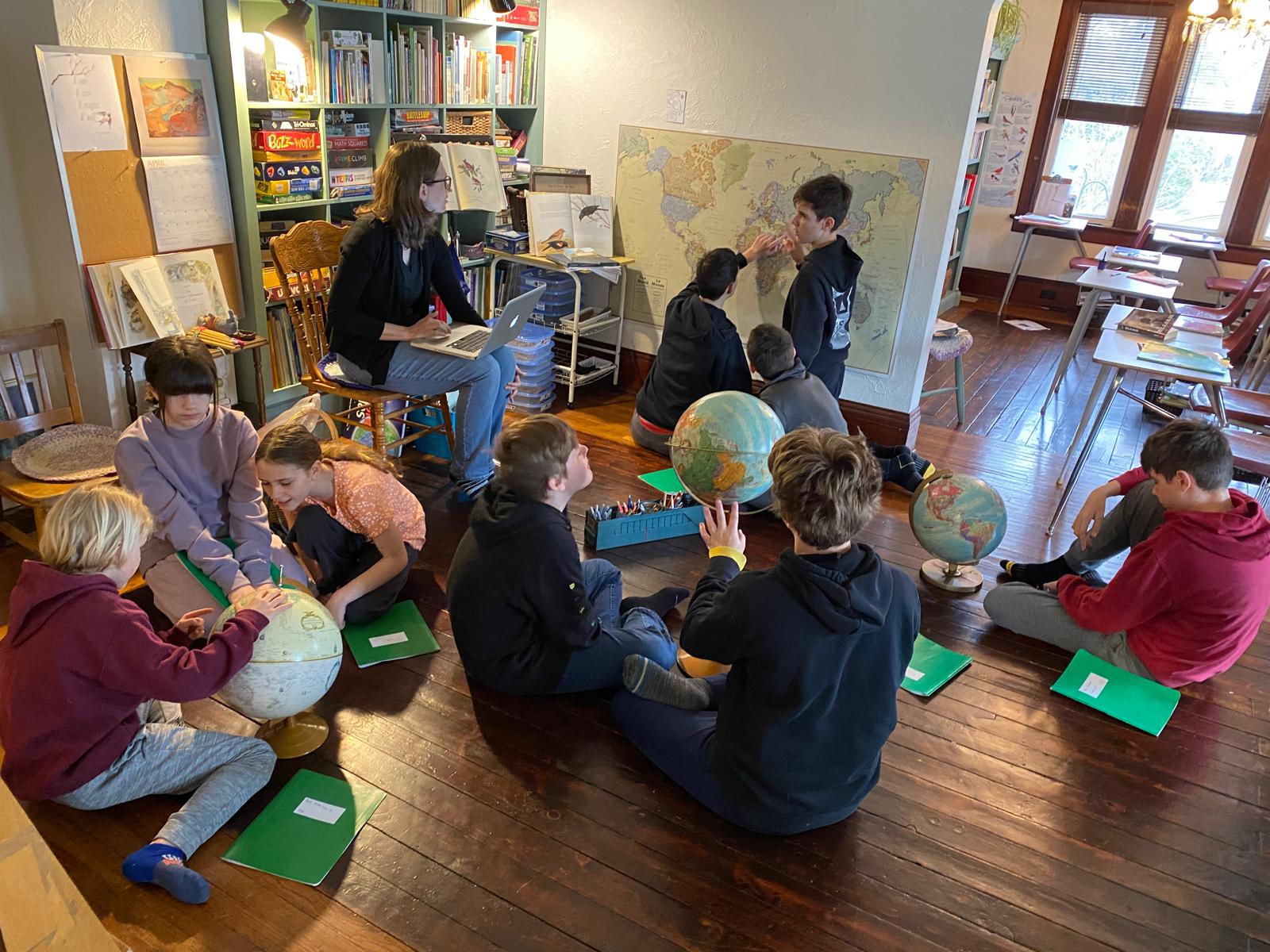
If you’ve ever wondered what actually happens between drop-off and pickup at a small school, you’re not alone. Most parents can picture a traditional classroom easily enough: rows of desks, a bell schedule, a single teacher at the front of one grade. What’s harder to picture is a day built around wonder, short lessons and time spent outdoors. At WONDERfield Community School, a private school in Kingsville, Ontario, the day has its own rhythm, and it looks different from what many of us grew up with. So here is an honest walk through a school day, from the first song of the morning to the last handicraft of the afternoon.
Morning Gathering: How the WONDERfield Day Begins
Every day at WONDERfield begins together. Before any lessons start, students and teachers come into one room for Morning Gathering, a shared start that sets the tone for everything that follows. There’s no rush and no scramble to beat a bell. It’s a settling-in.
Singing, then reflecting
The gathering opens with singing. Students learn hymns, French songs and folk songs together, voices young and old in the same room. Then the room turns to something to think about: a poem read aloud, or a piece of music to listen to and talk over. Children share what they noticed, what a line meant to them, what a melody made them feel.
It’s an unhurried way to begin, and it does quiet, important work. The hymns are part of how faith shows up naturally in the school day, sung rather than lectured. The poems and music train attention, the habit of really noticing something before moving on.
Mixed ages, small forms
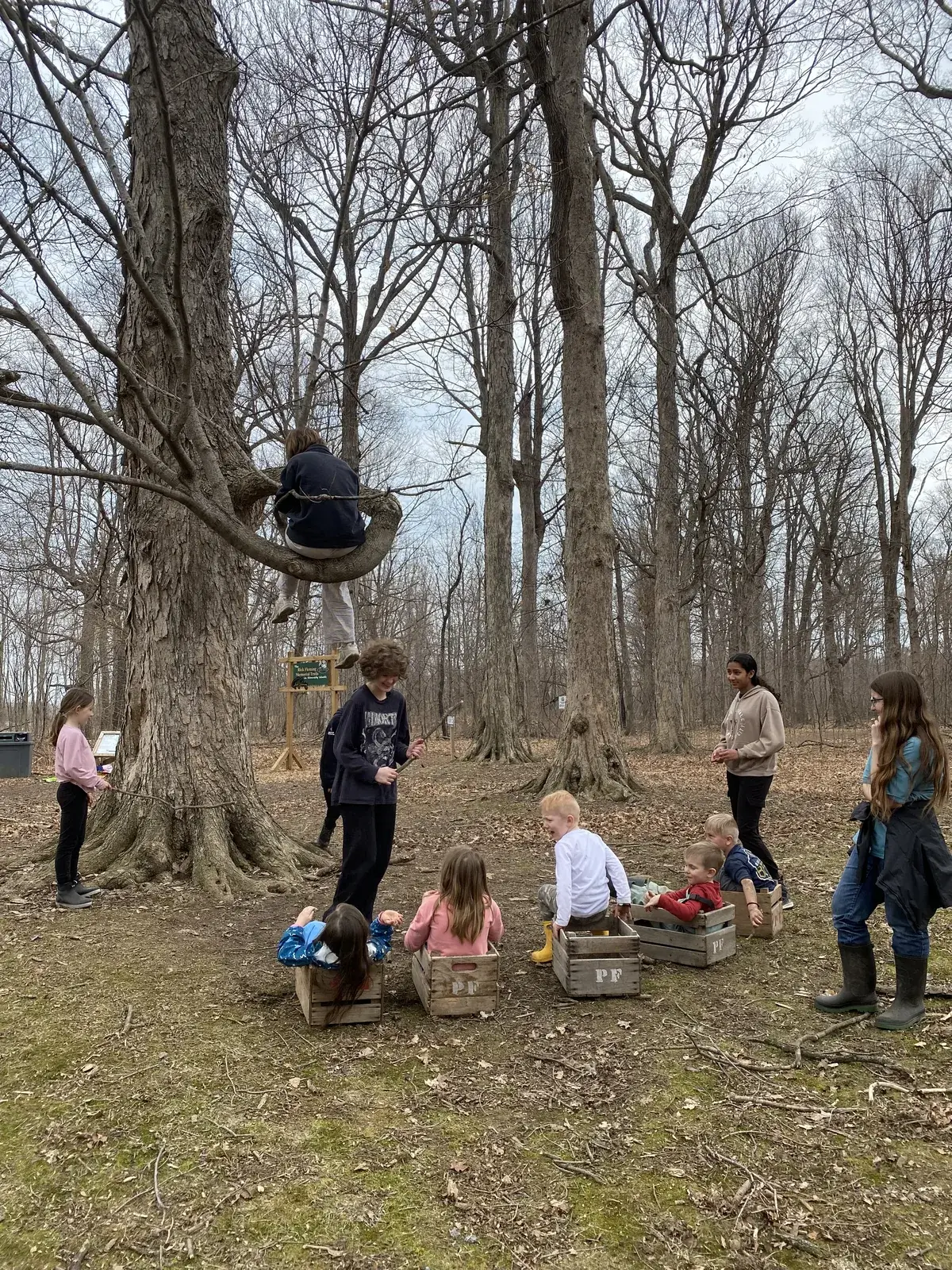
What makes the gathering feel like a family gathering is who’s in the room. WONDERfield doesn’t sort children into single-grade classrooms. Instead it uses multi-age forms of 4 to 15 students, part of what the school calls its cottage school design. Older students sit alongside younger ones, and mentoring happens simply because the ages are mixed.
The younger students arrive for a 9AM start and finish at 3PM, Monday to Thursday. The older students begin earlier, at 8:30AM, ready for longer lessons and a fuller day. However their timetable is shaped, though, the morning starts the same way for everyone: gathered, singing, thinking together before the first lesson of the day.
A Rhythm of Short Lessons and Narration
Once the gathering ends, the day moves into lessons. A parent used to long class periods might expect children hunched over the same subject for an hour. WONDERfield works the other way. Lessons are short, roughly 20 to 30 minutes, and there are many of them across the morning.
The subjects range widely: history, science, art and music, literature, Bible, geography, mathematics and languages. A child might move from mathematics to a living history reading to a French lesson in a single stretch of morning. Each subject gets full, focused attention, then the day turns to something else while attention is still fresh.
Why the lessons are short
The short lesson is matched to how children actually pay attention. A young child can give real, concentrated effort to a subject for twenty minutes. Ask for an hour and the effort thins out. By keeping lessons brief and varied, WONDERfield asks children to work hard while they’re at their best, then to change gears before they tire. It’s one of the quiet strengths of a small private school in Kingsville, Ontario, where the timetable can be shaped around children rather than bells.
Telling it back
After a lesson, children don’t sit a quiz. They narrate. Narration means telling back what they’ve just learned, in their own words. Sometimes that’s spoken aloud, a child recounting the chapter just read. Sometimes it’s written down. Sometimes it comes out as a recitation, or as an illustration a child draws of what stayed with them.
Telling something back forces a child to make it their own. You can’t narrate what you didn’t attend to. So the habit does double work: it shows the teacher what a child understood, and it teaches the child to listen closely the first time.
Older students carry longer lessons and more of them, with the same rhythm underneath. The subjects deepen, the narrations grow more demanding, but the day is still built from focused work followed by telling it back.
Beyond the Books: Outdoors, Handicrafts, WONDERquests and Independent Study
Charlotte Mason put it plainly: “Never be within doors when you can rightly be without.” At WONDERfield, that isn’t a slogan. It’s part of every day.
Time outdoors, every day
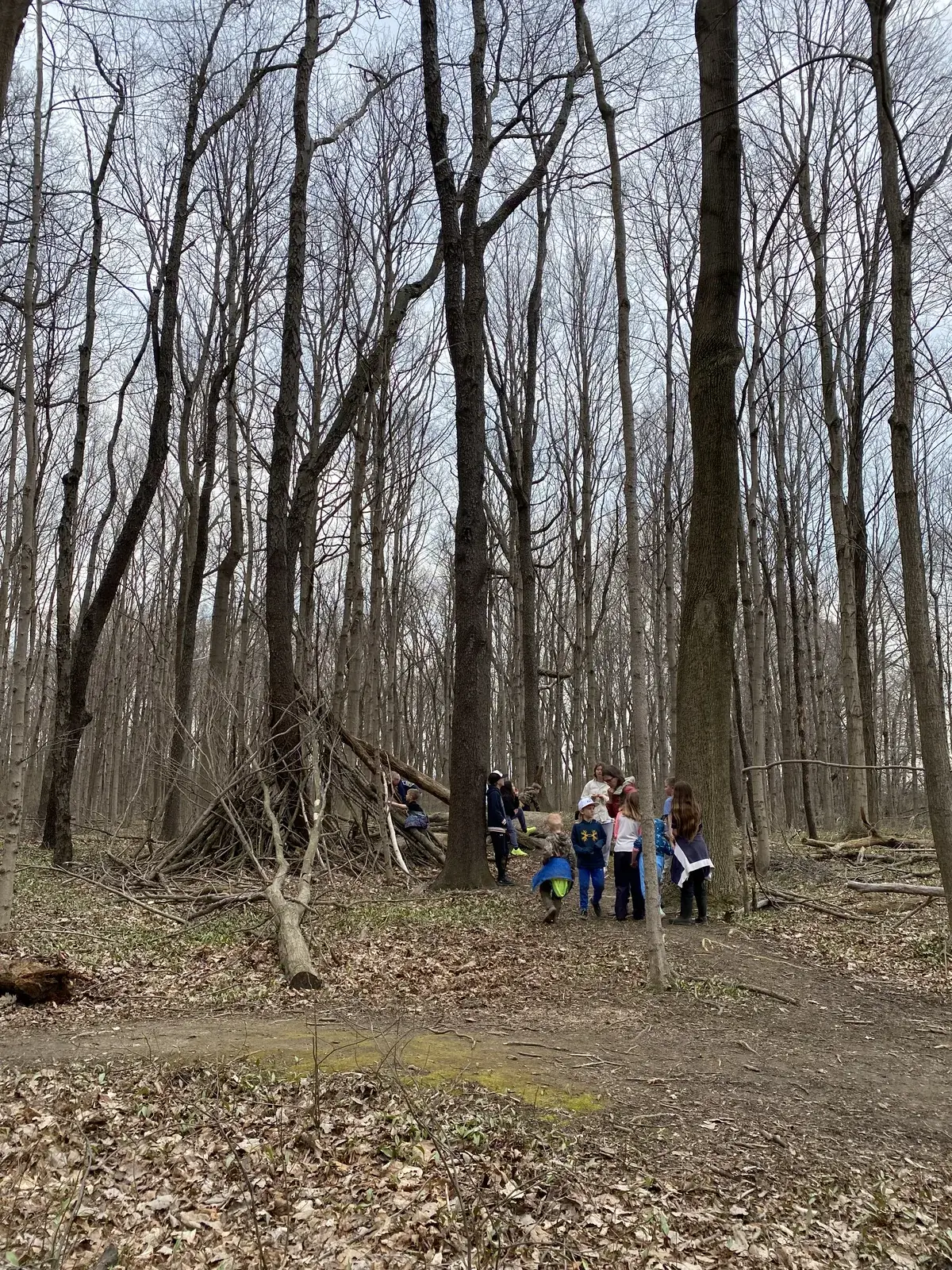
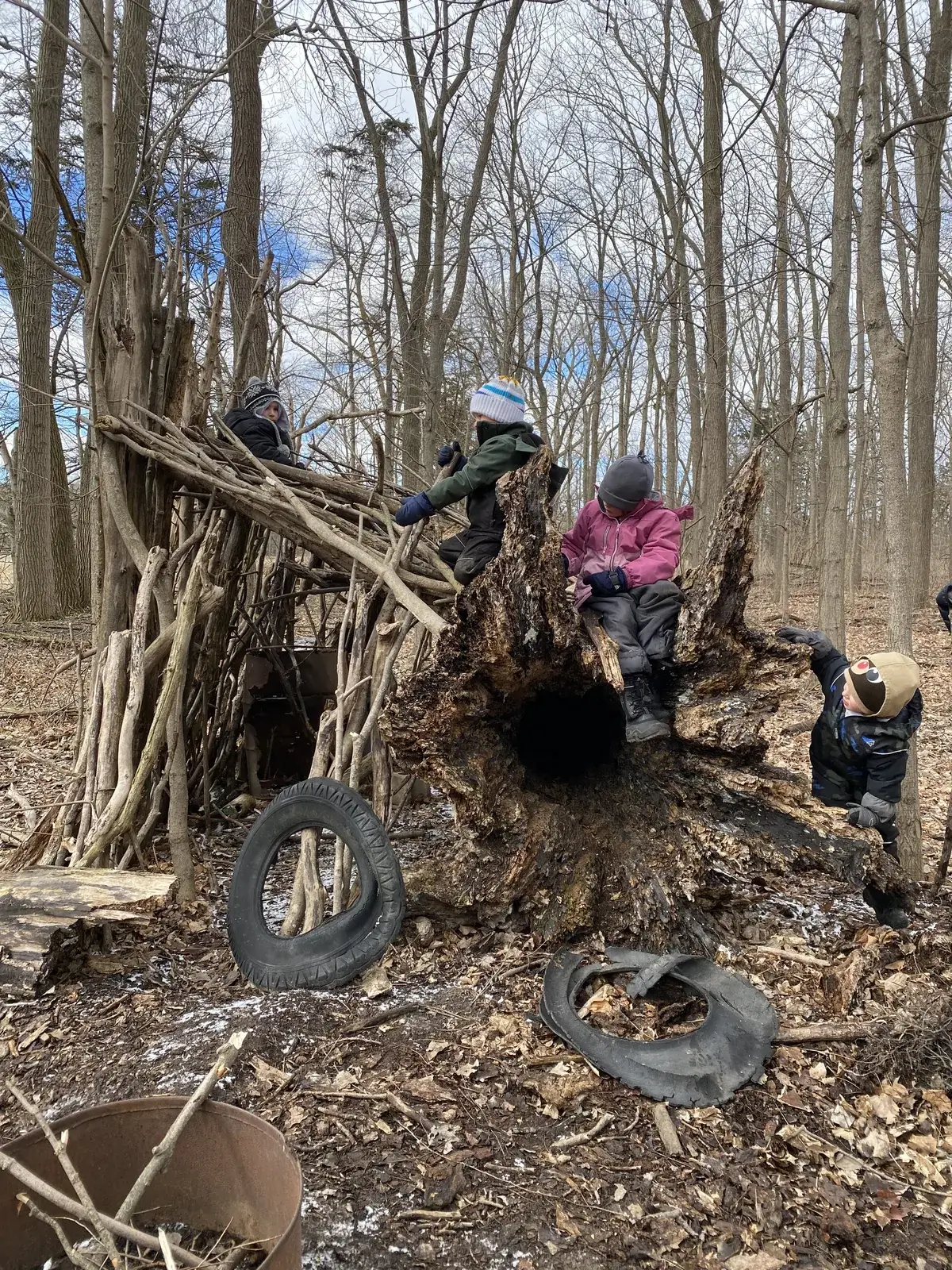
Children spend part of each day outside. That might mean journalling under a tree, sketching wildlife near a pond, or self-organised games in the open air. Nature study takes them across Kingsville and Essex County: local parks, conservation areas, the Lake Erie shoreline, community gardens. A child who has watched a season turn near the water has learned something a textbook can only describe.
Making things with their hands
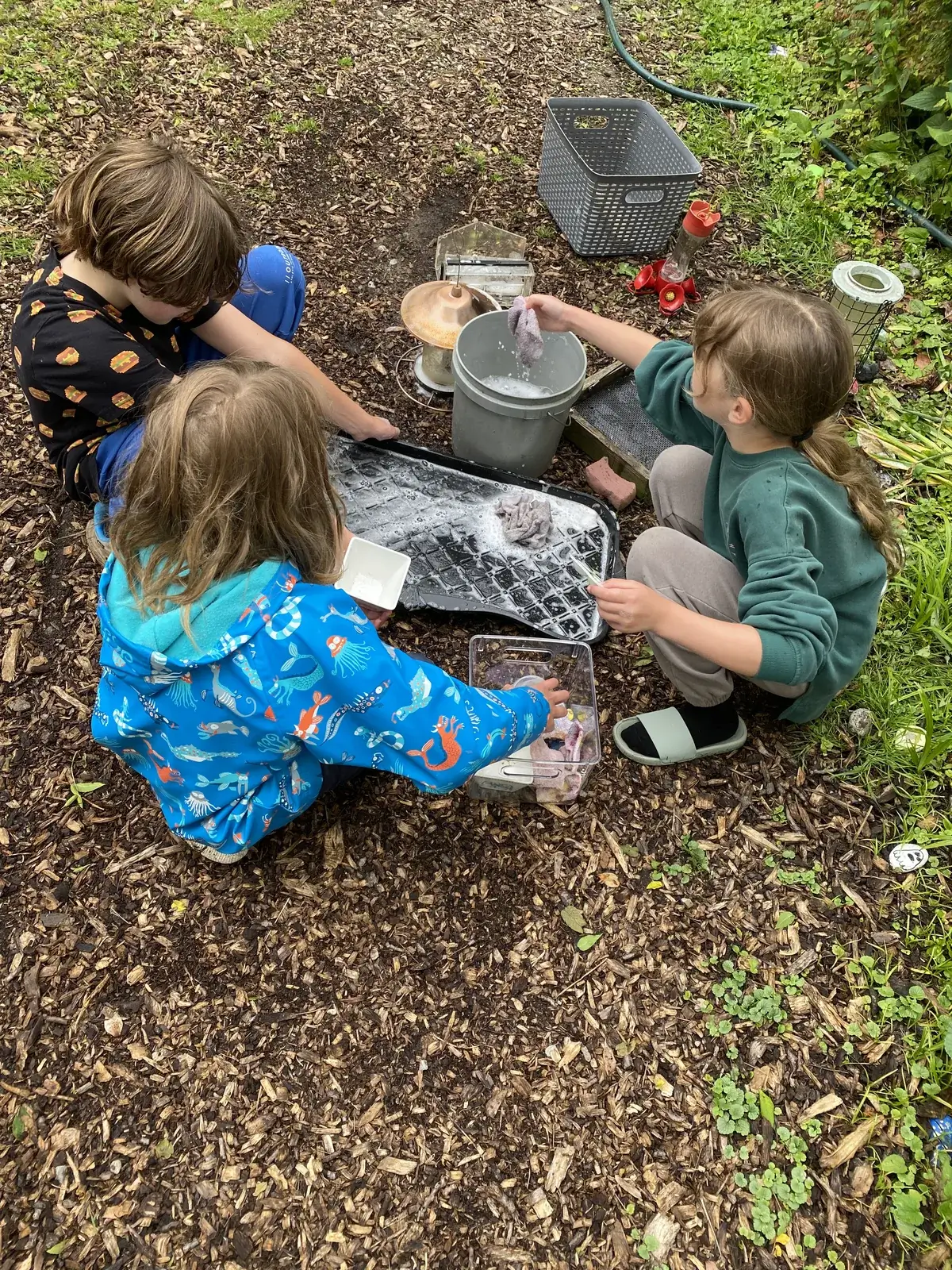
Handicrafts have a settled place in the week. Children work in the woodshop, with fabric art, and in the kitchen. They model clay, build shelters from sticks, paint from nature, and cook and bake. The point isn’t to keep them busy. Making a real thing well, from start to finish, teaches patience and care that carry into every other subject.
Thursday WONDERquests
Every Thursday afternoon the schoolhouse empties for a WONDERquest: a farm, a museum, a conservation area, a historic site. What children read about on other days, they meet in person here. Learning stops being abstract when you can walk through it.
Fridays and independent study
Younger students keep to Monday through Thursday. Older students take on curated independent studies away from the schoolhouse on Fridays, working through their own projects with less direct supervision. It’s deliberate preparation for high school, where they’ll be expected to manage their own learning. By then, the habit is already theirs.
Key Takeaways
A day at WONDERfield holds together because each piece serves the child. Morning Gathering sets a shared, unhurried tone. Short lessons ask for focused effort while attention is fresh, and narration turns that effort into real understanding. Time outdoors, handicrafts, Thursday WONDERquests and independent Fridays make sure learning reaches beyond the page and into the wider world of Kingsville and Essex County.
None of it happens by bell or by chance. In multi-age forms of four to fifteen students, a private school in Kingsville, Ontario can shape the day around children rather than the other way round. Every child is known by name, and by heart. If you’d like to see what an ordinary day here looks like, we’d be glad to have you visit the schoolhouse.
Ready to learn more about how WONDERfield Community School can nurture your child’s love of learning? We’d love to share more about our approach and answer your questions. Visit our contact page to schedule a school tour or chat with our team about your family’s educational journey.