
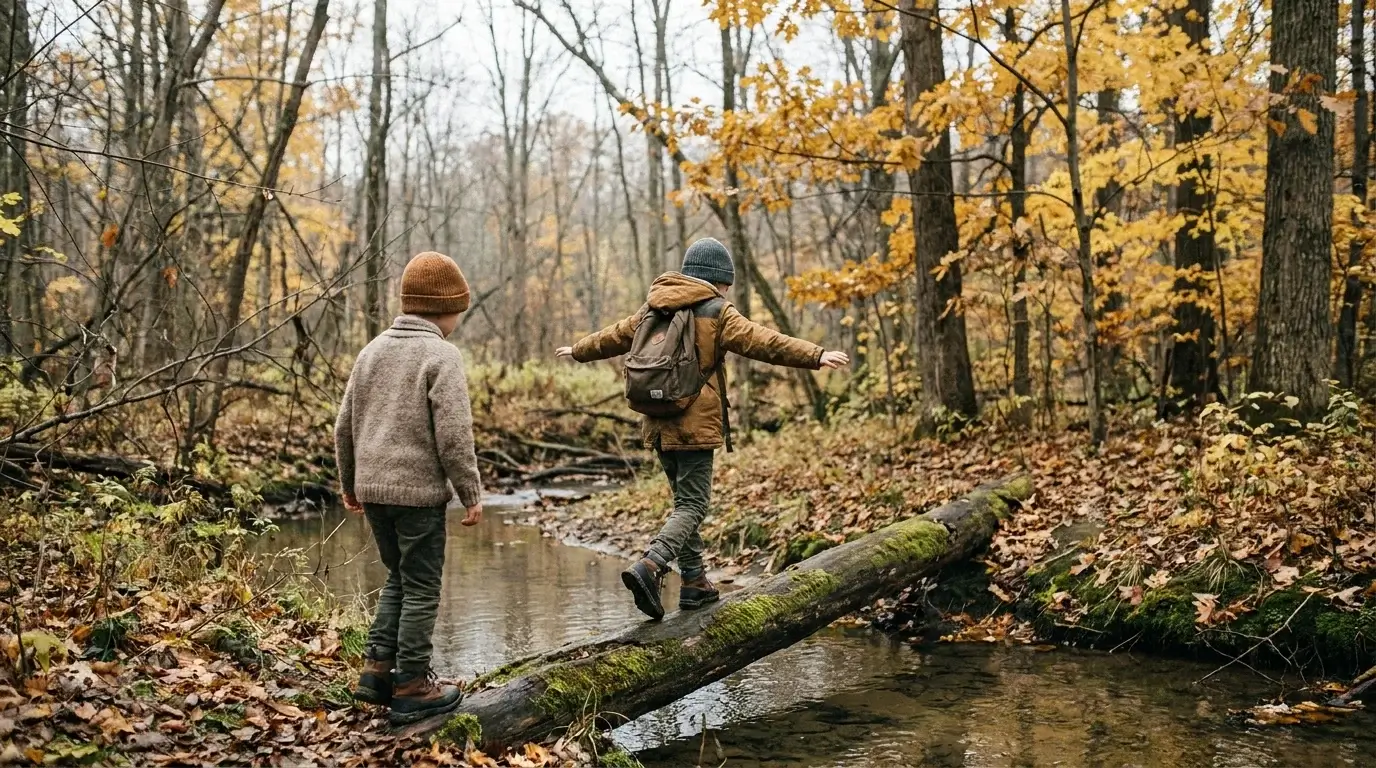
Next time you’re at a park, count how many times you hear an adult say “be careful.”
It’s the reflex of every loving parent, and according to the Canadian Paediatric Society, it’s doing less than we think. Their position statement on outdoor risky play suggests replacing it with a question: “Do you feel stable?” or “What’s your plan if you jump?”
The difference is small and the effect isn’t. “Be careful” tells a child you don’t trust their judgment. A question asks them to use it.
That single reframing is why we wanted to share this document with our families.
What the statement actually says
The position statement is called Healthy childhood development through outdoor risky play: Navigating the balance with injury prevention. It was written by Dr. Emilie Beaulieu and Dr. Suzanne Beno and published in January 2024 in Paediatrics & Child Health.
We want to be clear about the source, because a lot of parenting advice online comes from American research about American schools. This is the Canadian Paediatric Society, writing about Canadian children, using Canadian injury data.
Their definition of risky play is “thrilling and exciting forms of free play that involve uncertainty of outcome and a possibility of physical injury.” That covers climbing, running fast, rough-and-tumble games, playing near water, using real tools, and exploring somewhere a grown-up isn’t watching.
Their central recommendation is a phrase worth writing on the fridge: keep children as safe as necessary rather than as safe as possible.
Risk and hazard are different things
The statement draws a line that we find genuinely useful.
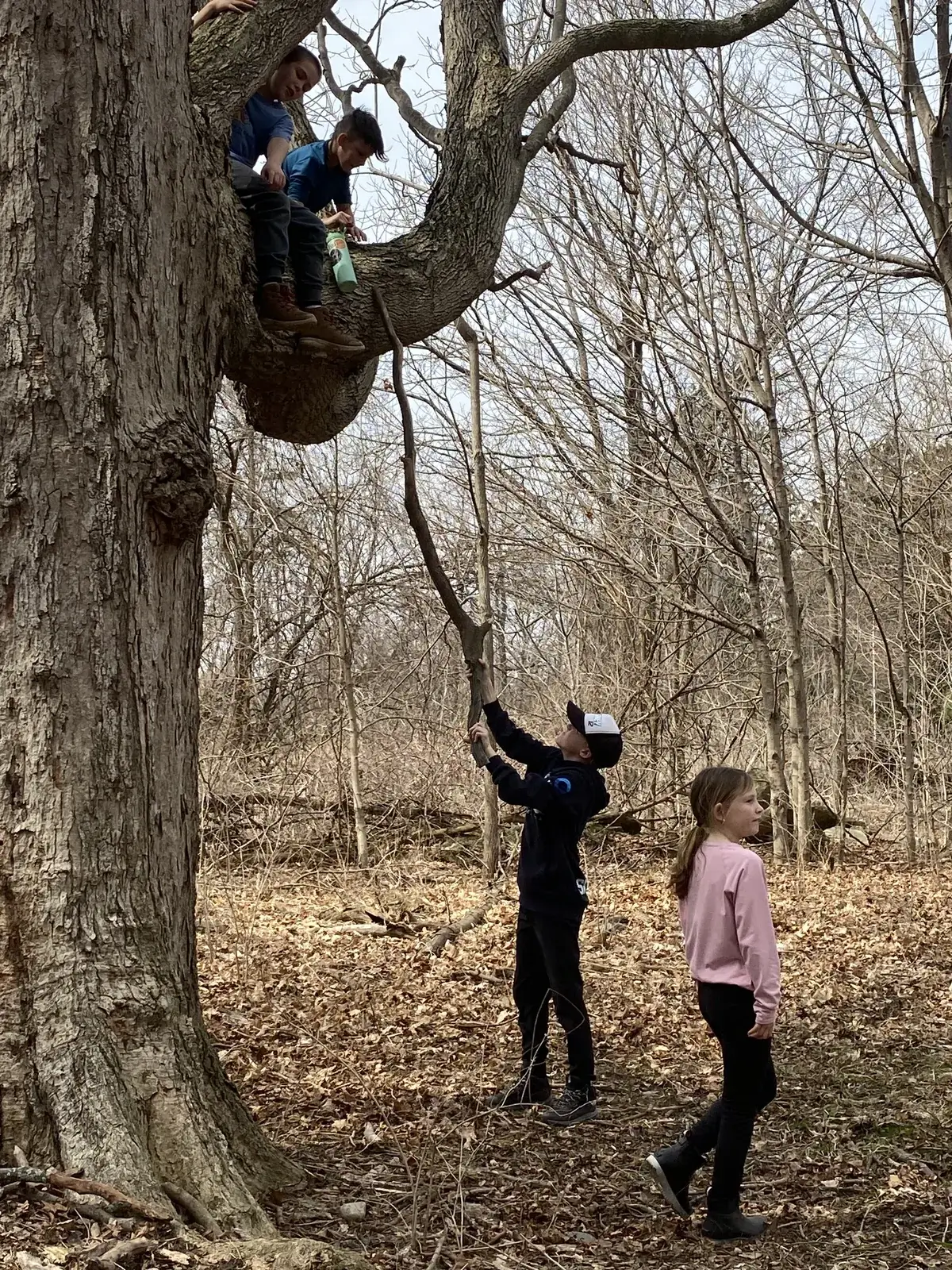
A risk is a challenge a child can see, weigh, and decide about. A wobbly log across a creek is a risk. The child can look at it, test it with a foot, and choose.
A hazard is a danger the child has no way to assess. A rotted branch that looks solid, a loose railing, a patch of ice under fresh snow. The child can’t evaluate what they can’t perceive.
Adults are responsible for removing hazards. Risks are where the learning happens, and taking them away takes the learning with them.
The numbers surprised us
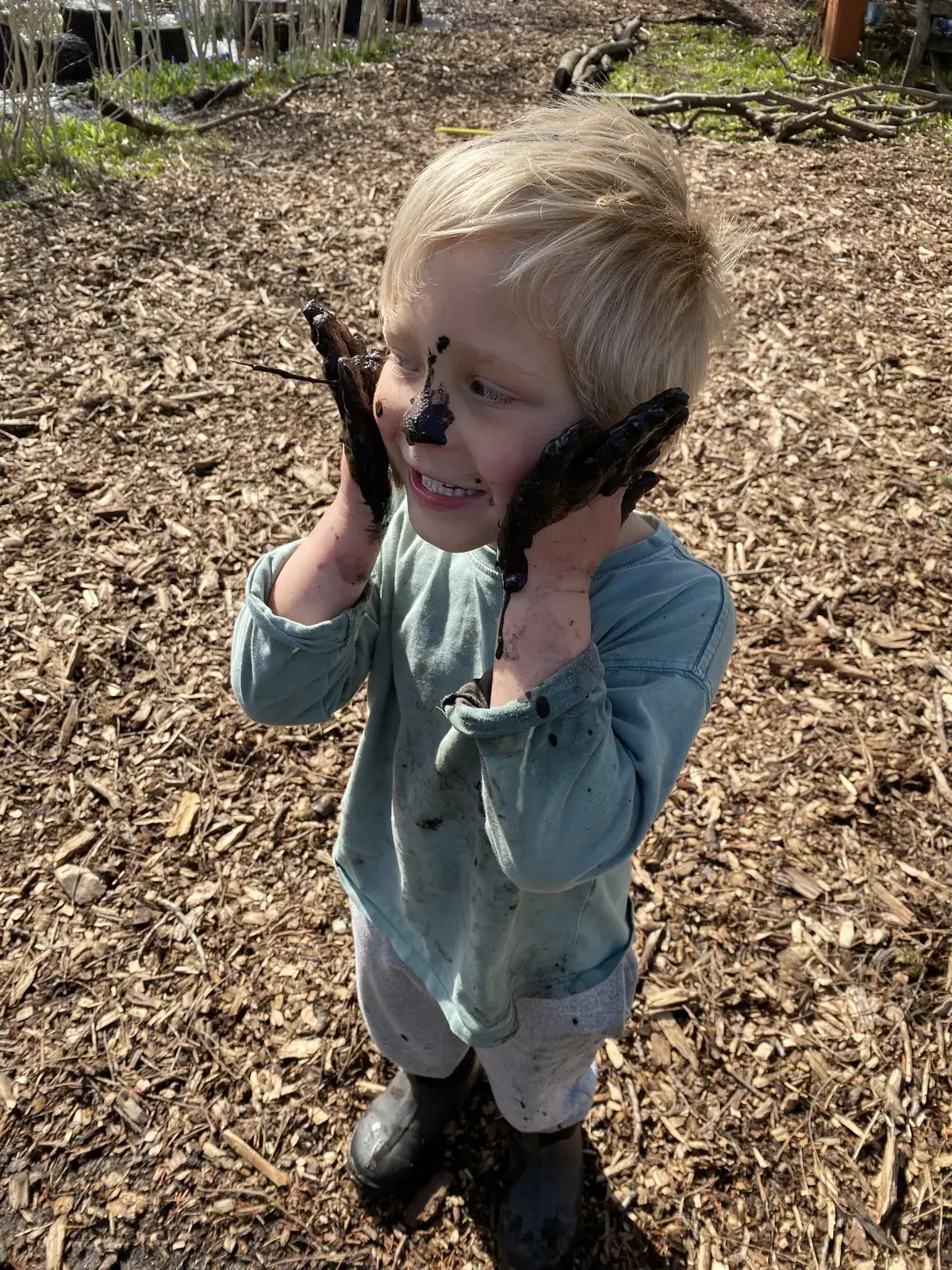
The statement pulls from CHIRPP, Canada’s national injury surveillance data. Tree climbing produces 195 injuries per 100,000 records.
For comparison: soccer accounts for 4,296. Playground falls, 4,090. Cycling, 2,816. Skateboarding, 881.
And this line stopped us: no child fatalities caused by falling from a tree have been reported in Canada in the past 20 years.
The broader finding is the one worth sitting with. Children are less likely to be injured during unstructured play than while playing an organized sport. The activities that feel dangerous to us often aren’t the ones sending children to hospital.
The statement also lists what children gain: more physical activity and less sedentary time, better problem-solving, stronger self-esteem, and lower anxiety through manageable exposure to fear-provoking situations. Rough-and-tumble play is associated with fewer reports of bullying, not more.
The authors go as far as suggesting doctors “prescribe” active outdoor free play, and add risky play to their clinical toolbox for managing anxiety, obesity, and behavioural issues.
What this looks like on a Tuesday at WONDERfield
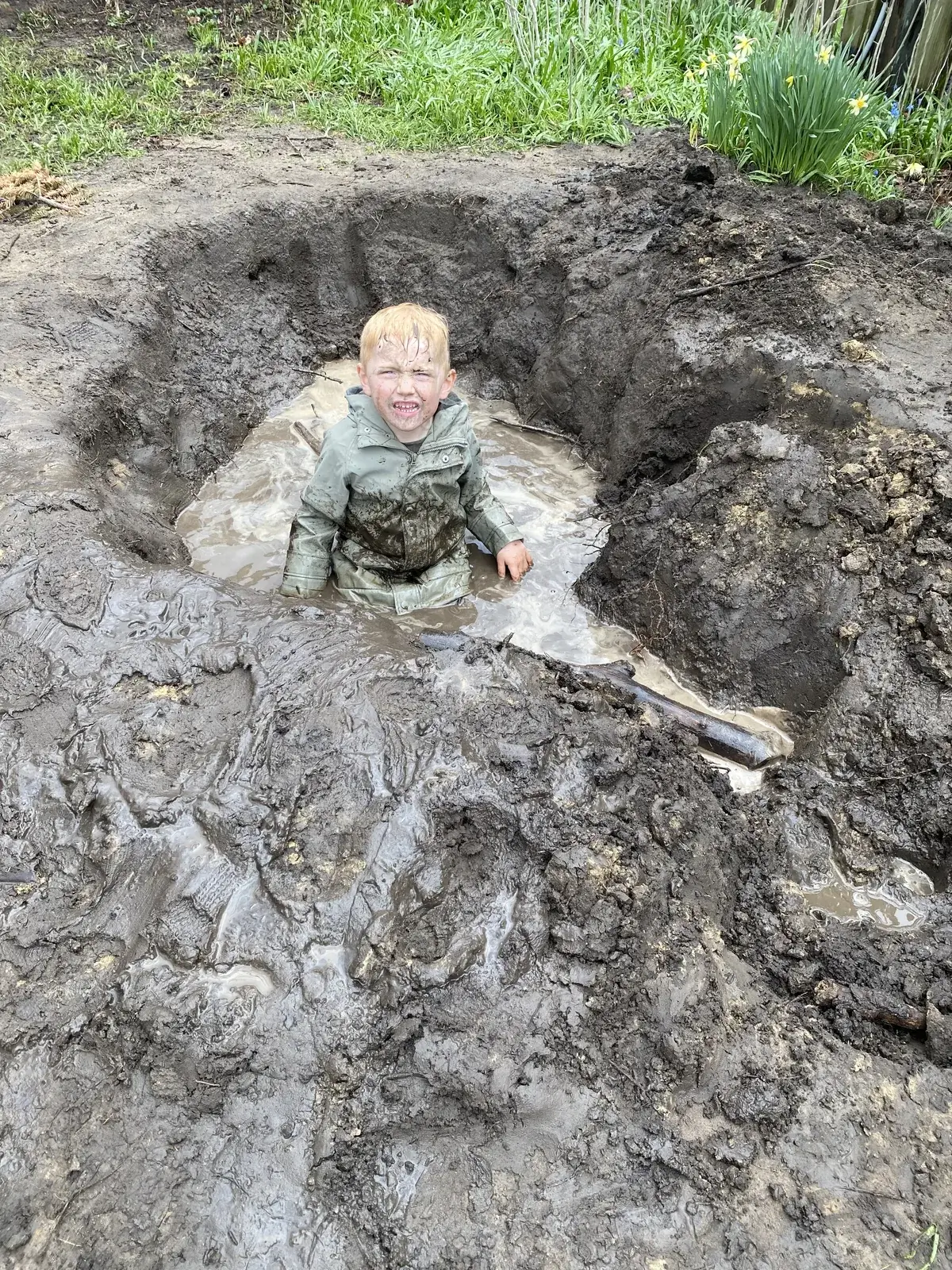
Charlotte Mason wrote that we should “never be within doors when you can rightly be without,” and our students are outside every day.
Some of that is structured. Every Thursday afternoon we run what we call WONDERquests, taking learning past the schoolhouse doors to conservation areas, farms, museums, and historic sites around Kingsville and Essex County.
A good deal of it isn’t structured at all, and that’s deliberate. Children build shelters out of sticks. They orienteer. They self-organize games and argue about the rules and sort it out themselves. They journal under a tree and study wildlife near a pond.
Inside, the same principle holds. Handicrafts here mean real tools and real materials: clay modelling, paper sloyd, measuring and cutting, baking and cooking in an actual kitchen. A child who has learned to handle a sharp knife carefully is safer than a child who has never been permitted to touch one.
Our multi-age forms help more than we expected. Younger students watch older ones attempt something first, which the statement calls vicarious play, and it’s one of the ways children calibrate what they’re ready for.
None of this means we’re casual about supervision. Our classes are small, our teachers know every child’s actual capabilities rather than their age bracket, and we take hazards seriously. The goal is a child who can assess a situation and make a sound call, and that skill only develops through practice.
Read it yourself
We’d rather you read the statement than take our summary of it. It’s about a 15 minute read, it’s free, and it’s written for parents as much as for physicians.
Healthy childhood development through outdoor risky play: Navigating the balance with injury prevention, Canadian Paediatric Society, January 2024.
If it changes how you think about your own backyard, that’s worth more than anything we could tell you about ours.
Ready to learn more about how WONDERfield Community School can nurture your child’s love of learning? We’d love to share more about our approach and answer your questions. Visit our contact page to schedule a school tour or chat with our team about your family’s educational journey.