

There’s a 47 minute talk by Jonathan Haidt that we think is worth an evening of your time. We’d suggest not watching it alone.
That isn’t a gimmick. The talk’s own argument is that no family can solve this by itself, and the people who’ve found it useful mostly watched it with other parents and then talked afterwards.
The problem he describes
Haidt’s case is that childhood was rewired over roughly a decade, as play moved indoors and social life moved onto phones, and that the effects showed up in adolescent mental health with unusual speed.
He walks through why it happened, what fragmenting attention does to a developing mind, why the pattern looks different for boys than for girls, and what he considers a spiritual flattening in how young people spend their hours. Then he turns to what can actually be done.
Whether you accept every part of it, the description will be familiar to most parents of a certain age. The recognition is the point at which the conversation usually starts.
The four norms
His proposal comes down to four changes, and he’s deliberate about their being norms rather than rules. A rule is something one family imposes. A norm is something enough families do that no single child carries the cost of it.
They are: delay smartphones until high school, delay social media until 16, phone-free schools, and more independence and play in the real world.
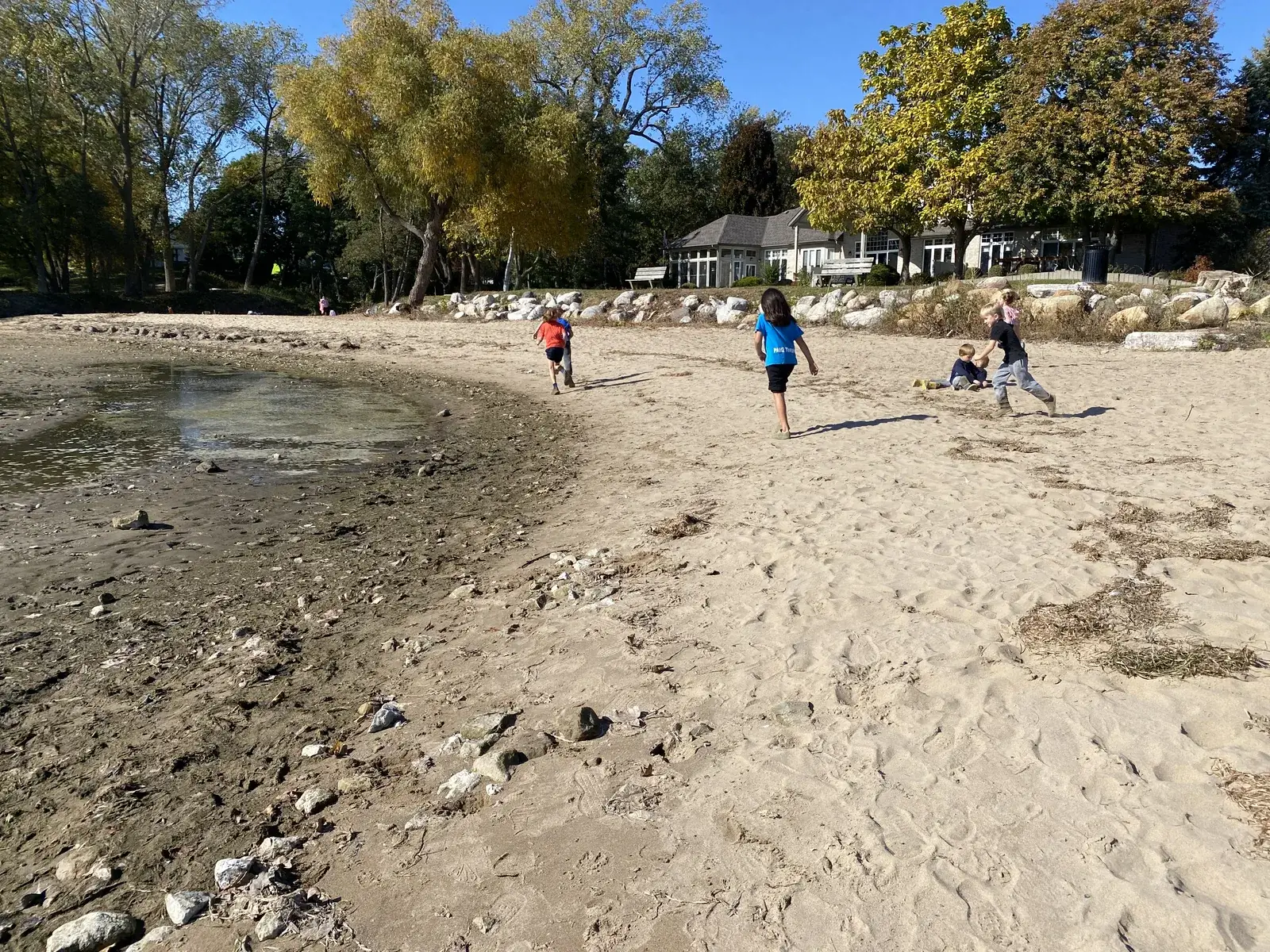
The logic of the fourth is worth drawing out, because it’s the one that sounds softest and isn’t. Much of what a phone offers a young person is autonomy: somewhere to go, something to decide, a life not supervised by adults. If children have none of that in the physical world, the phone isn’t competing with anything. Giving real independence back is what makes the other three sustainable.
Why the collective part matters
The reason to watch this with other families is contained in his own framing. The solutions are simple, he says, and the work is hard, and it’s easier if people act together.
A parent who holds the line alone has a child who is genuinely, measurably left out. Three or four families in the same class holding the same line have children with each other. The cost drops to almost nothing.
That’s the practical reason we’re pointing our community at this rather than writing our own version of it. A school can set its own expectations. It can’t decide what happens in your house, and it shouldn’t try. What it can do is make sure families who want to have this conversation can find each other.
For our part, the school-hours side is already settled. Phones are away during the day, we don’t issue Chromebooks, and no child works alone behind a screen. The third of Haidt’s four norms, phone-free schools, is one we already hold. That leaves the harder three, all of which live at home, and none of which any single family should have to carry alone.
Some of our families are further along this road than others, and a few are deliberately going the other way. Both are welcome here. We’d rather host the conversation than settle it.
Before you click
Two practical notes, so you’re not caught out.
The site’s sign-up form asks for a zip code and has no field for a country, so a Canadian postal code has no way through it. The talk itself plays fine without signing up for anything. A couple of the download links on that page are also broken at the moment.
The resource list is built for American and British families, with alternatives suggested for each, and there’s no Canadian equivalent on it. Some of what’s suggested won’t map cleanly onto phone plans, school boards or summer options here in Essex County. Take the argument and adapt the specifics.
How The Great Rewiring Of Childhood Impacted Everything, And What We Can Do About It, Jonathan Haidt.
The talk is free and public. There’s a chapter list on the page if you’d rather watch it across a few sittings than in one.
If two or three families from the schoolhouse end up watching this in the same week and comparing notes, that’s a better outcome than any of us reaching a conclusion on our own.
Ready to learn more about how WONDERfield Community School can nurture your child’s love of learning? We’d love to share more about our approach and answer your questions. Visit our contact page to schedule a school tour or chat with our team about your family’s educational journey.