
Most schools stop teaching children to make things somewhere around the end of kindergarten. After that, handwork becomes an occasional craft afternoon, or it disappears entirely to make room for subjects that get tested.
We schedule it every week, right through Grade 8, and we treat it as a subject rather than a reward for finishing the real work.
Parents touring the schoolhouse often ask about this, usually politely and sometimes with a raised eyebrow. It’s a fair question. Here’s the reasoning.
What counts as a handicraft
The distinction matters, because “crafts” can mean almost anything.
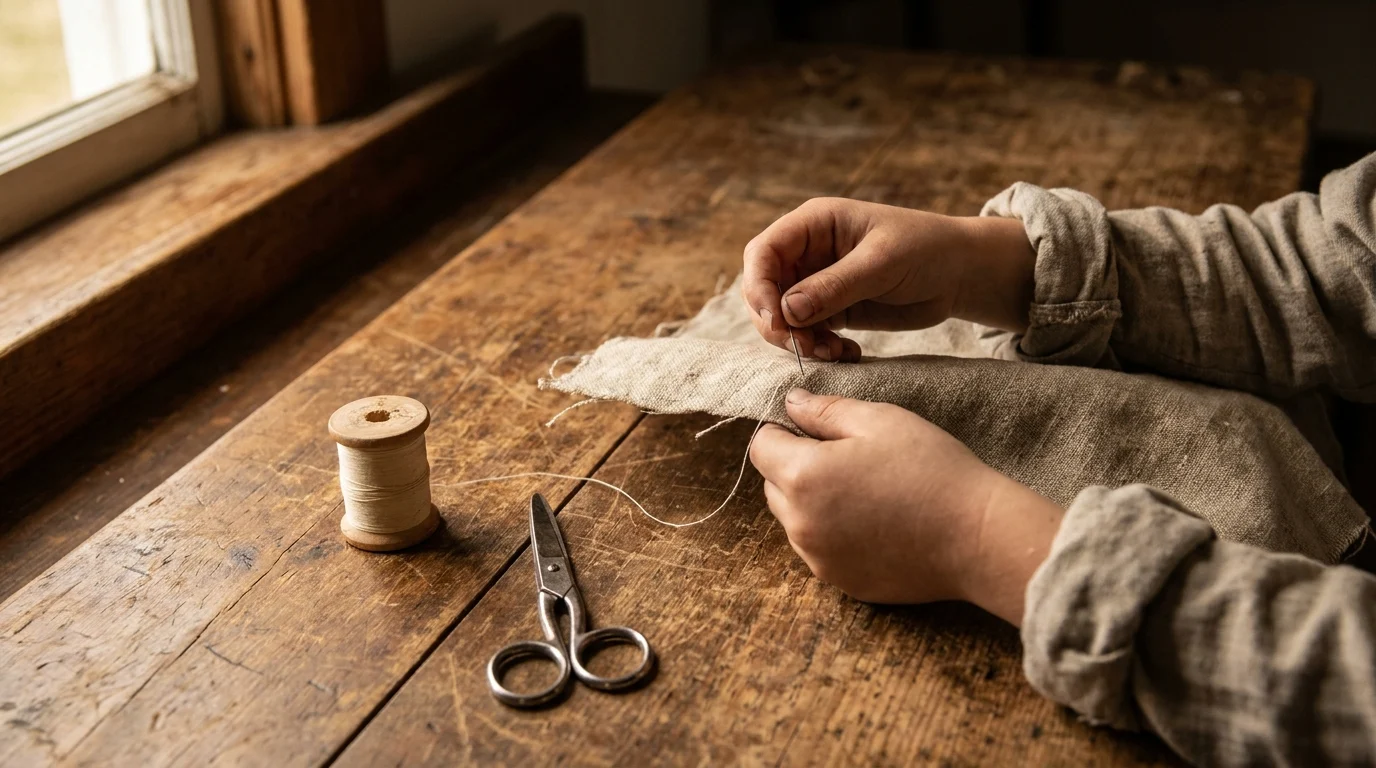
Charlotte Mason meant work that produces something a person would actually want. Knitting, sewing, woodworking, leather work, cooking. Not cutting and gluing shapes that go home in a backpack and into the recycling by Thursday.
She had a phrase for the alternative. She warned against letting children spend their time “making futilities.”
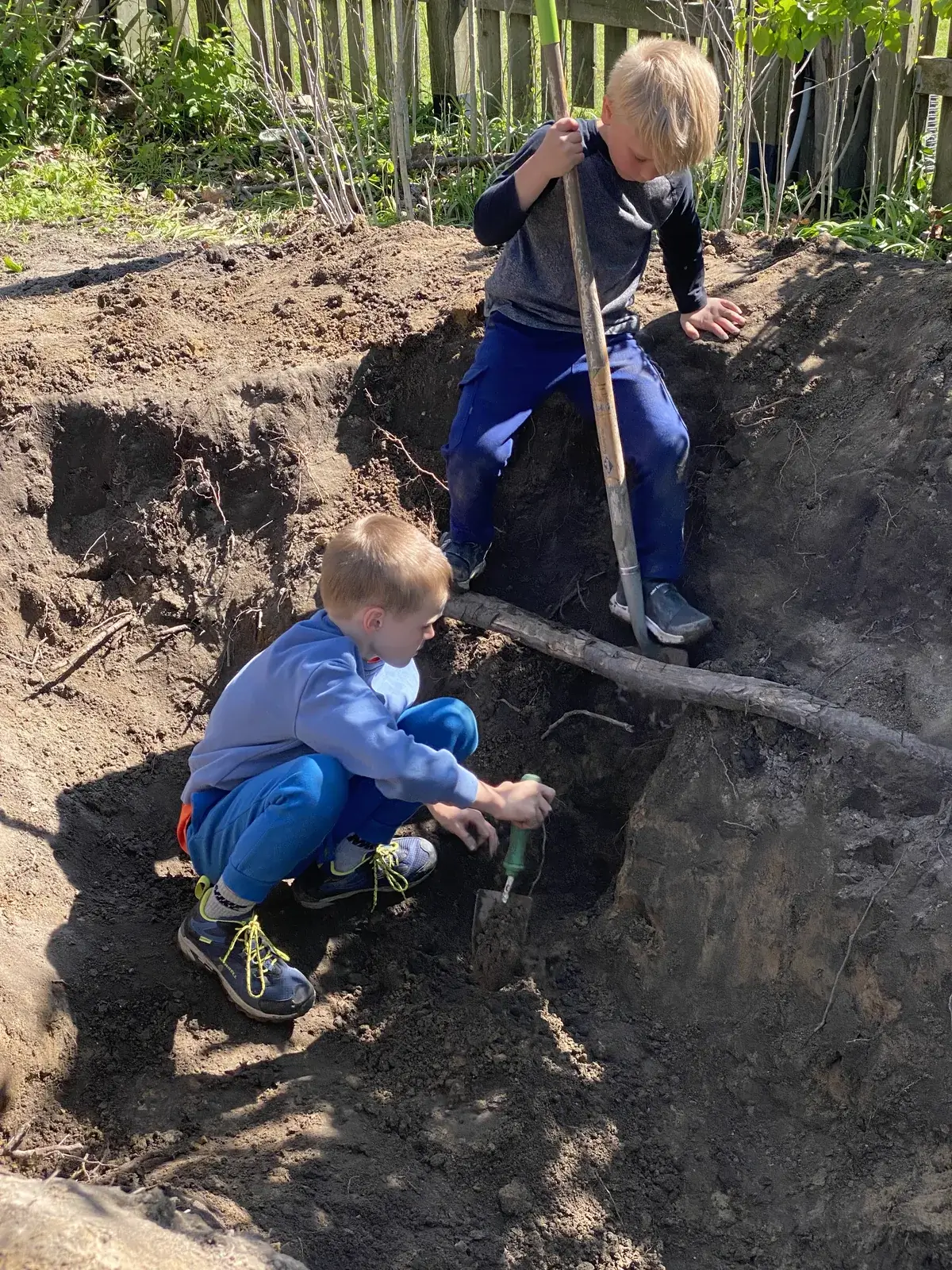
At WONDERfield that means woodshop, fabric art and the kitchen, alongside clay modelling, paper sloyd, and the measuring and cutting that go with them. A child who spends six weeks on something takes home a thing that works.
Mason’s four tests
What makes her approach usable rather than merely admirable is that she was specific about the conditions.
The work has to be genuinely useful. It has to be taught slowly and carefully, one step at a time, rather than demonstrated once and abandoned. No slipshod work is accepted. And the project has to be kept well within the child’s compass, which is to say hard enough to demand real effort and not so hard that the child gives up.
That last one is the balance our teachers spend the most thought on. A project pitched too easy teaches nothing. Pitched too hard, it teaches a child that they’re not the sort of person who can make things, which is a lesson that sticks for decades.
Our own framing is the habit of best effort. The standard isn’t the finished object being impressive. It’s the child having done what they were actually capable of.
What it builds
The obvious gain is with the hands. Cutting a straight line, threading a needle, judging how much pressure a chisel needs, these are learned by doing them badly for a while and then less badly.
The less obvious gain is perseverance, and it’s the one we’d defend hardest.
A knitting project or a woodshop piece takes weeks. It cannot be finished the night before. There’s a stretch in the middle of every long project where the novelty has worn off and the end isn’t in sight, and getting through that stretch is a skill. Very little else in a school day teaches it as honestly, because most schoolwork is designed to be completed within the lesson.
Mason described education as “the science of relations,” by which she meant that a child should form real acquaintances with real things. Wood behaves differently from cloth, which behaves differently from clay. You learn that with your hands and you don’t forget it.
There’s also something we see regularly and can’t fully account for. A child who has been quiet all week in lessons will sometimes turn out to be the one with genuine ability at the sewing machine or the workbench. Mason’s own line was that “nobody knows how much is possible to any one person,” and handwork is one of the few places in a school week where a completely different set of capabilities gets to show itself.
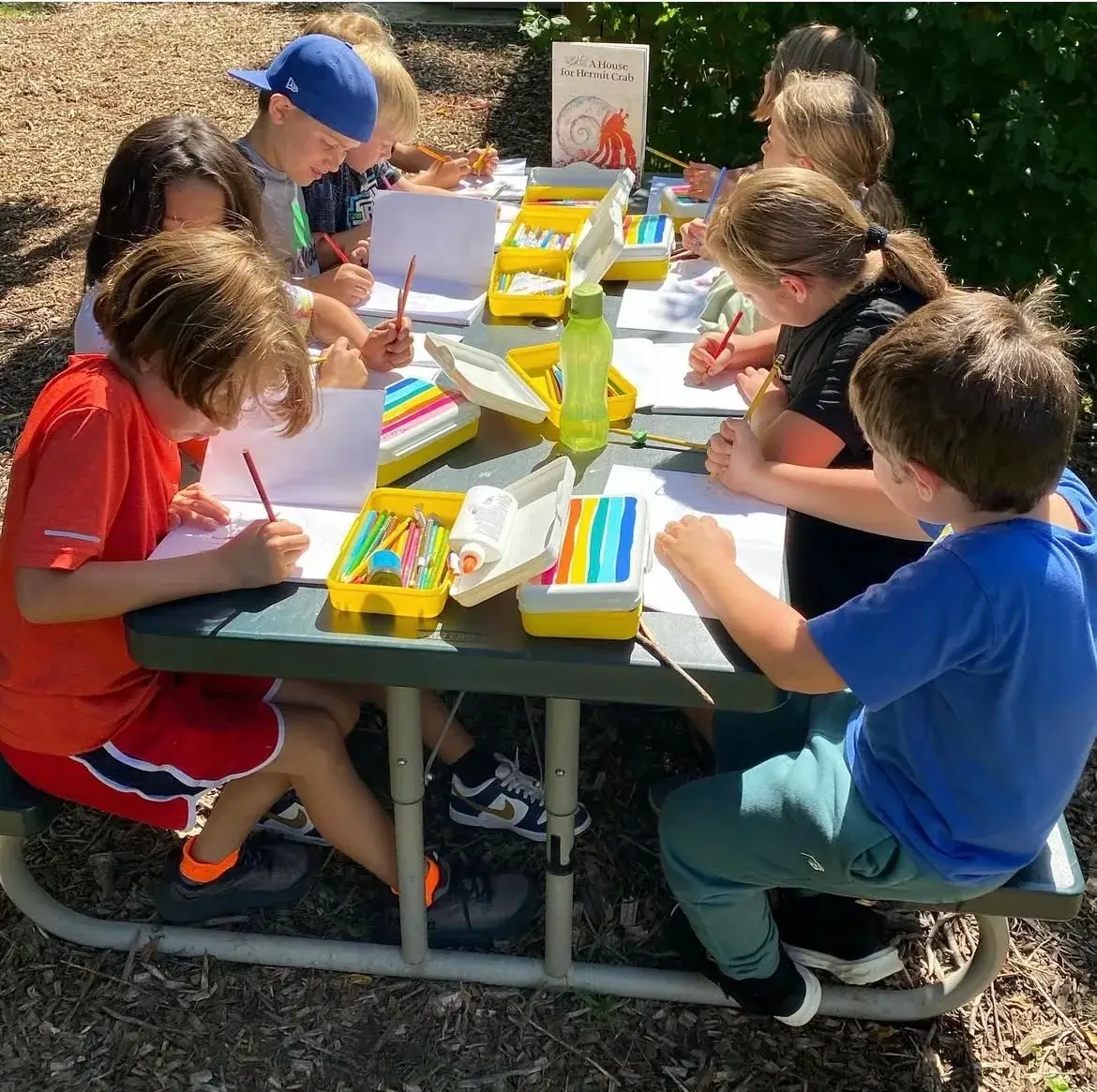
Our multi-age forms make this easier to catch. A ten-year-old who’s good with their hands ends up teaching a seven-year-old, and both of them learn something about themselves in the process.
Making something for someone else
The part that matters most to us is what happens to the finished work.
Mason connected her students with local charities so that what they made went to somebody who needed it. We do the same. Our students make gifts and cards for shut-ins, run the Valentine’s Blitz for the neighbours of the schoolhouse, and visit senior homes.
A child who has made a thing with their own hands and given it away has learned something about being a producer rather than a consumer, and they’ve learned it in a way no lesson on generosity could deliver.
That, more than the coordination or the perseverance, is why handicrafts hold their place in our timetable.
Watch the fuller case
Simply Charlotte Mason has a short talk on this that lays out Mason’s reasoning better than a paragraph from us can. It runs about ten minutes, and there’s a written version if you’d rather read it.
What’s the Point of Handicrafts?, Simply Charlotte Mason.
Two notes for context. It’s made by a curriculum publisher, so it ends with a pitch for their materials, and it’s addressed to parents teaching at home rather than to a school setting. The thinking carries across either way.
If it leaves you wanting to teach your own child something with their hands over the next few months, pick one thing that takes longer than an afternoon. That’s most of the method right there.
Ready to learn more about how WONDERfield Community School can nurture your child’s love of learning? We’d love to share more about our approach and answer your questions. Visit our contact page to schedule a school tour or chat with our team about your family’s educational journey.