
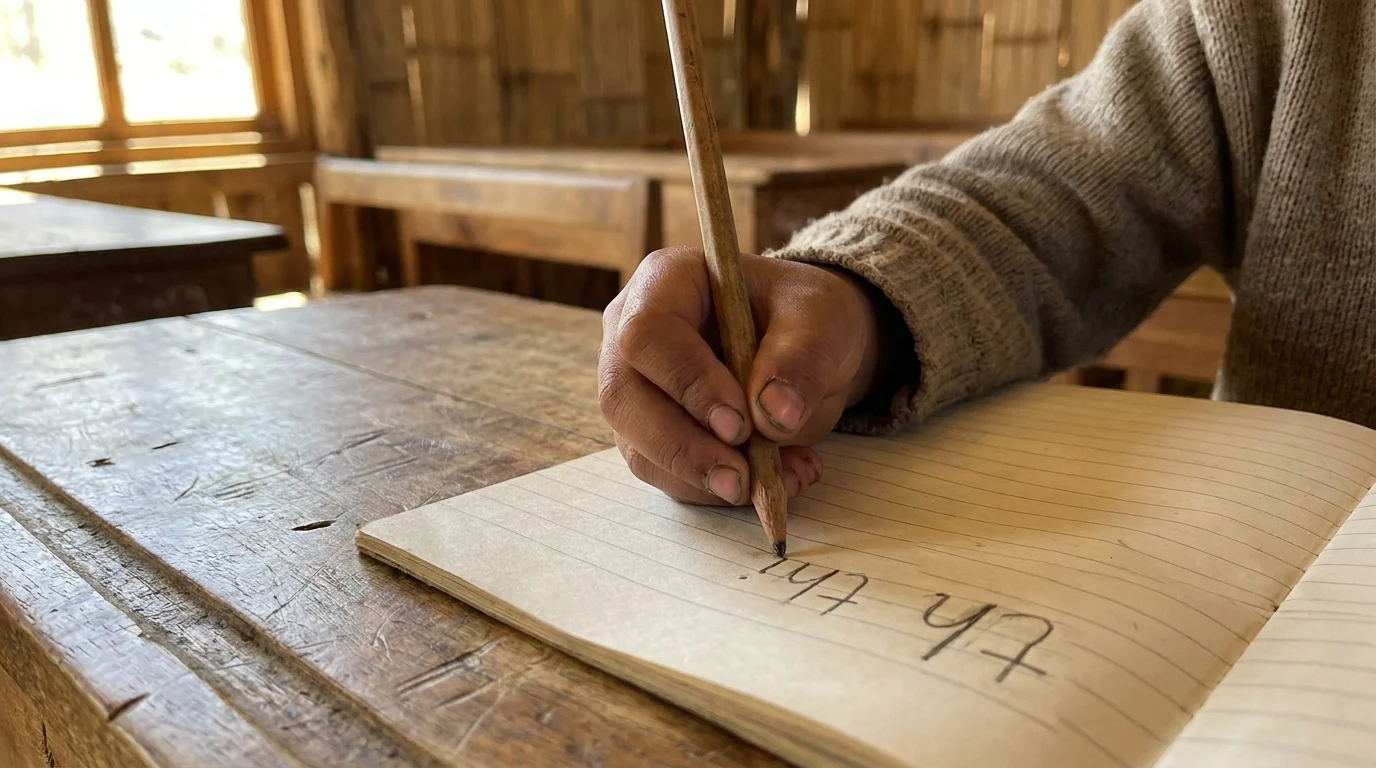
Our students write a great deal by hand. Narration in their own words, nature journal entries, notes, sketches with labels. Visitors sometimes ask whether that’s tradition for its own sake, given that most of them will type for a living.
It’s a fair challenge, and it turns out there’s a decent research answer to it.
The Norwegian study
In January 2024, two researchers at the Norwegian University of Science and Technology published an EEG study comparing what the brain does during handwriting against what it does during typing.
Ruud Van der Weel and Audrey van der Meer put high-density sensors on participants and watched the electrical activity while they wrote words by hand and then typed the same words. The handwriting condition produced widespread connectivity across brain regions, patterns of different areas coordinating with one another. The typing condition didn’t.
Van der Meer’s own summary is that they don’t see that synchronized activity in typing at all.
The proposed reason is mechanical. Forming a letter by hand requires continuously monitoring finger pressure and comparing the shape emerging on the page against the letter you intended, adjusting as you go. Typing the same letter is a keystroke, and every keystroke is the same movement.
The study was published in Frontiers in Psychology and is open access, so you can read it rather than take a journalist’s word for it, or ours.
It isn’t only one study
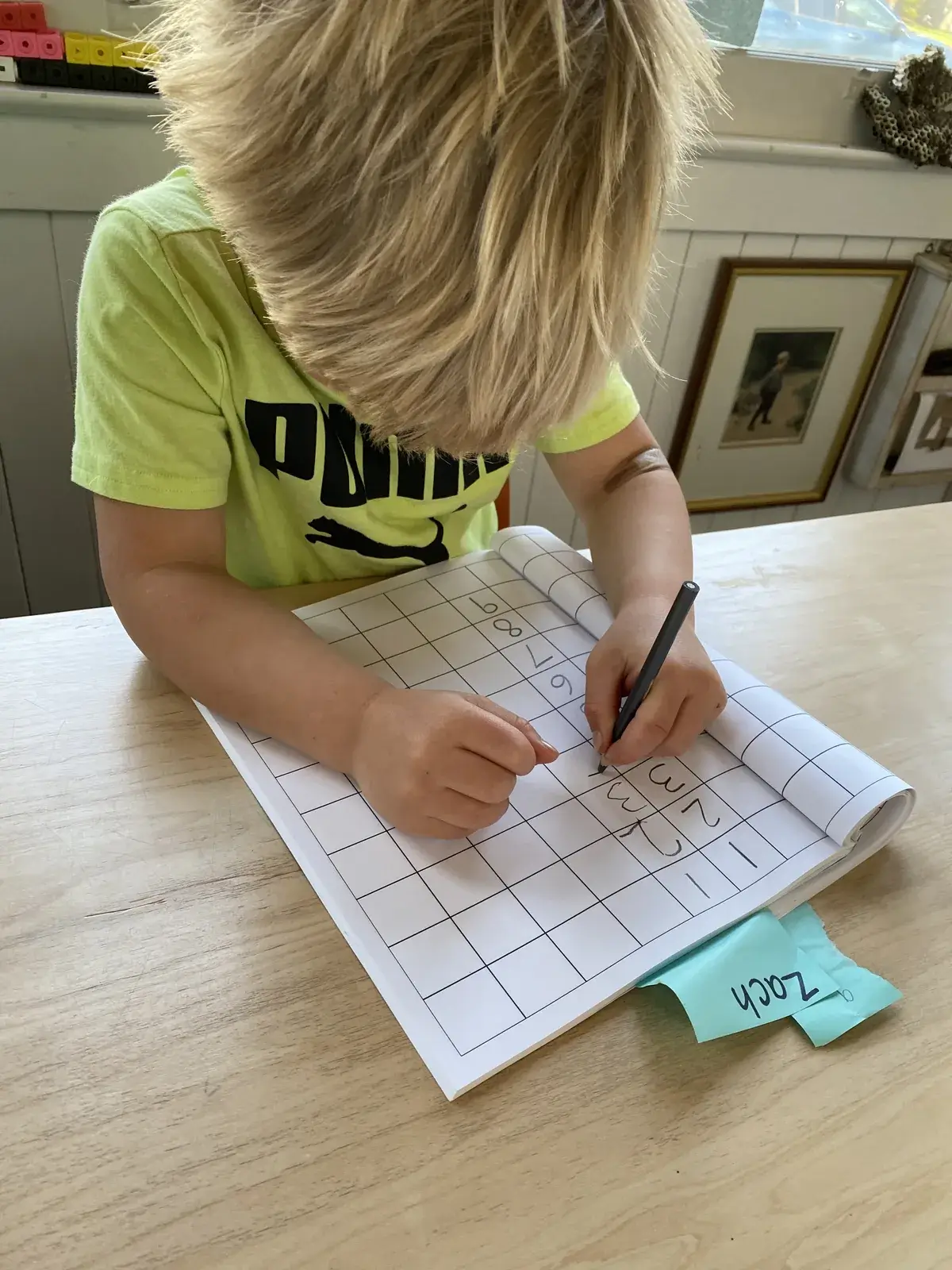
The finding sits alongside others from several countries.
A French group led by Marieke Longcamp found in 2005 that preschool children who practised letters by hand recognized them better, and retained that advantage longer, than children who practised by typing. A Japanese team at Osaka University found in 2021 that handwriting produced better memory and recall of words than typing did.
The most quoted study is American: Pam Mueller at Princeton and Daniel Oppenheimer at UCLA, published in 2014 under the title “The Pen Is Mightier Than the Keyboard.” Students taking lecture notes by hand understood the concepts better than students typing, and the mechanism they proposed is almost counterintuitive. Because handwriting is slower, you cannot get everything down. You’re forced to decide what matters and put it in your own words, and that decision is where the learning happens. A fast typist can transcribe a lecture without processing a sentence of it.
Van der Meer puts that plainly: if you take notes by hand, you can’t write everything down.
Two things this does not mean
We want to be careful, because this research is easy to overclaim.
It isn’t an argument for cursive over printing. The evidence points at handwriting itself mattering, and it doesn’t establish that joined-up writing beats print for these effects. If you’ve seen this research used to argue for cursive specifically, it’s been stretched further than it goes.
It also isn’t an argument against screens as such. Several of these researchers make the point that the benefit comes from the movement, not the paper. Writing with a stylus on a tablet appears to activate the same pathways. What matters is the hand forming the shape.
There’s a third finding we like more than we probably should. Young children’s handwriting is messy and inconsistent, and one researcher argues that the variability is itself useful, because a child producing the same letter slightly differently every time is building a more flexible concept of what that letter is. The wobbliness isn’t a defect to be trained out early.
Where it shows up in a school day
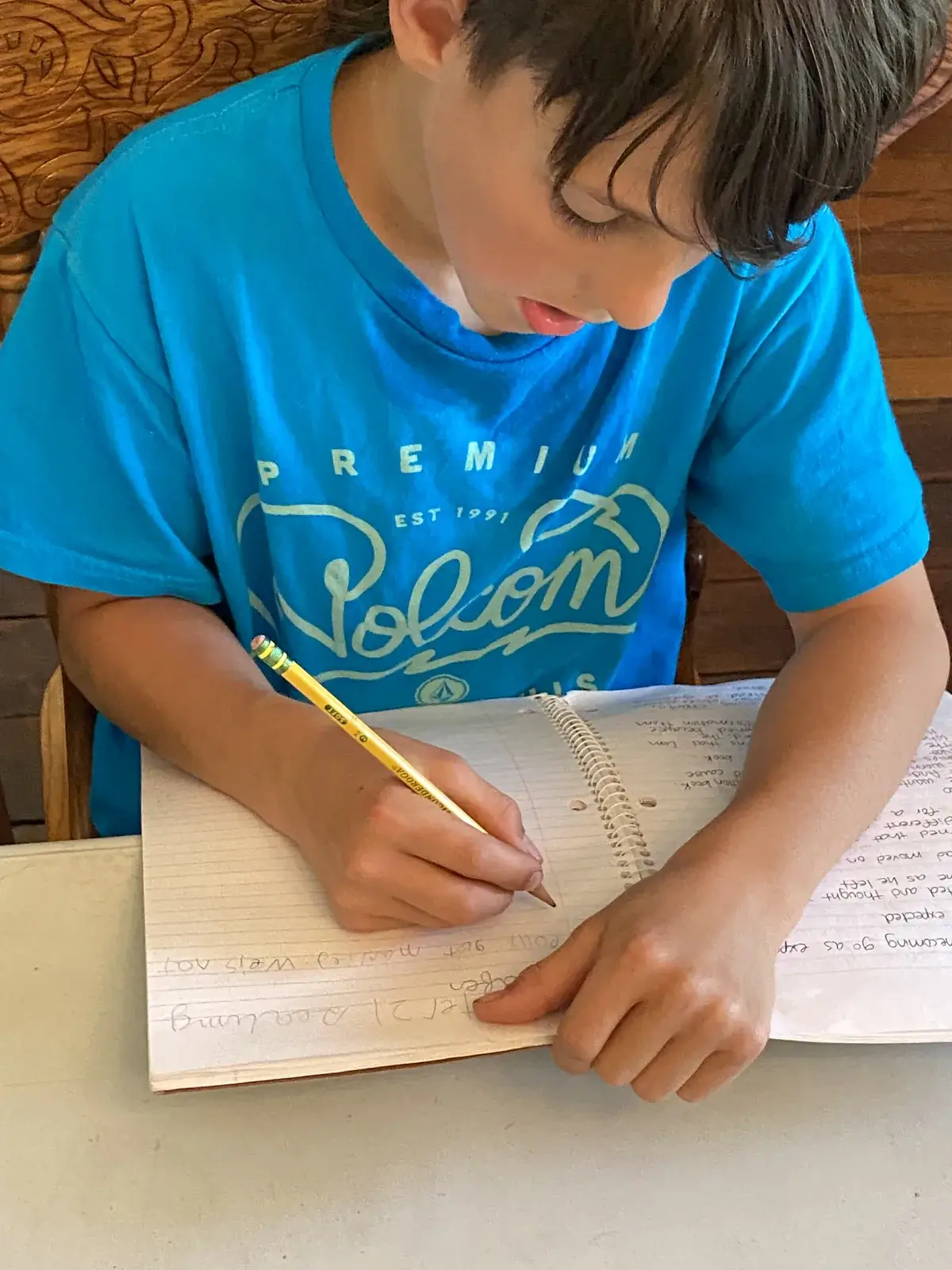
Narration is the reason handwriting matters most here.
When a child reads a chapter of a living book and then writes back what happened in their own words, they’re doing exactly what the note-taking research describes. They can’t transcribe, because the book isn’t in front of them. They have to decide what mattered and find their own language for it. Mason’s phrase was that “what a child digs for is his own possession,” and she arrived at that a century before anyone put an EEG cap on a student.
Nature journals do something similar with a drawing attached. Date it, draw what’s actually there, write what you noticed and what you couldn’t work out.
The other reason is one the studies don’t cover. Handwriting is slow, and slowness is a feature when the goal is thinking rather than output.
Read the summary
The clearest accessible write-up of this research is Jonathan Lambert’s for NPR, which quotes most of the researchers named above and links their studies directly.
Why writing by hand beats typing for thinking and learning, Jonathan Lambert, NPR, May 2024.
Worth noting that its framing is around several American states legislating cursive instruction, which isn’t the debate here in Ontario. The research it summarises is Norwegian, French, Japanese and American, and none of it is Canadian, so read it as evidence about how children’s brains work rather than about how our schools are doing.
Ready to learn more about how WONDERfield Community School can nurture your child’s love of learning? We’d love to share more about our approach and answer your questions. Visit our contact page to schedule a school tour or chat with our team about your family’s educational journey.