
When parents hear that our students do nature study, most picture a nature walk. Some fresh air, a few leaves collected, back inside for the real lessons.
That’s a reasonable guess, and it isn’t what the term means.
Nature study is a discipline with a method, and in a Charlotte Mason school it carries a good deal of the science curriculum in the early years. It’s worth explaining properly, because it’s one of the things families ask about most when they visit the schoolhouse.
What Mason was reacting against
Charlotte Mason was an English educator writing between the 1880s and the 1920s, and she was unimpressed with how science reached children in her day.
Her complaint was blunt. “For the most part science as she is taught leaves us cold.”
Her objection wasn’t to rigour. It was to sequence. Children were being handed classifications, diagrams and terminology for organisms they had never once met. The naming came before the noticing.
Her alternative was to reverse the order. Let the child meet the thing first, repeatedly and closely, in the field where it lives. Let curiosity build up over months. Then give it a name, and the name lands on something the child already knows.
She wanted to cultivate what she called “the love of investigation,” and she thought it grew slowly, in her phrase “growing with his growth.”
What it looks like here
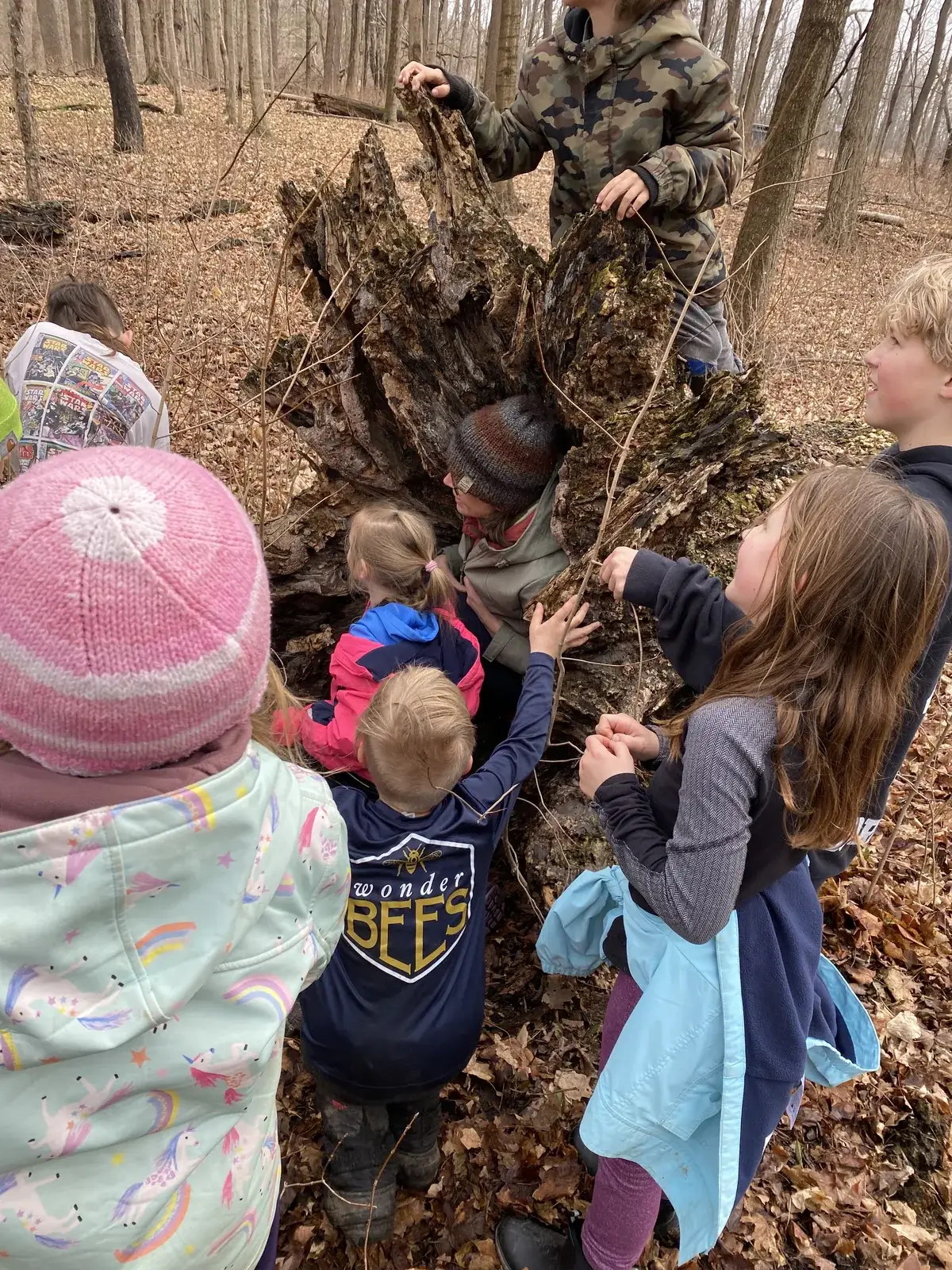
At WONDERfield this is ordinary weekly practice rather than a special event.
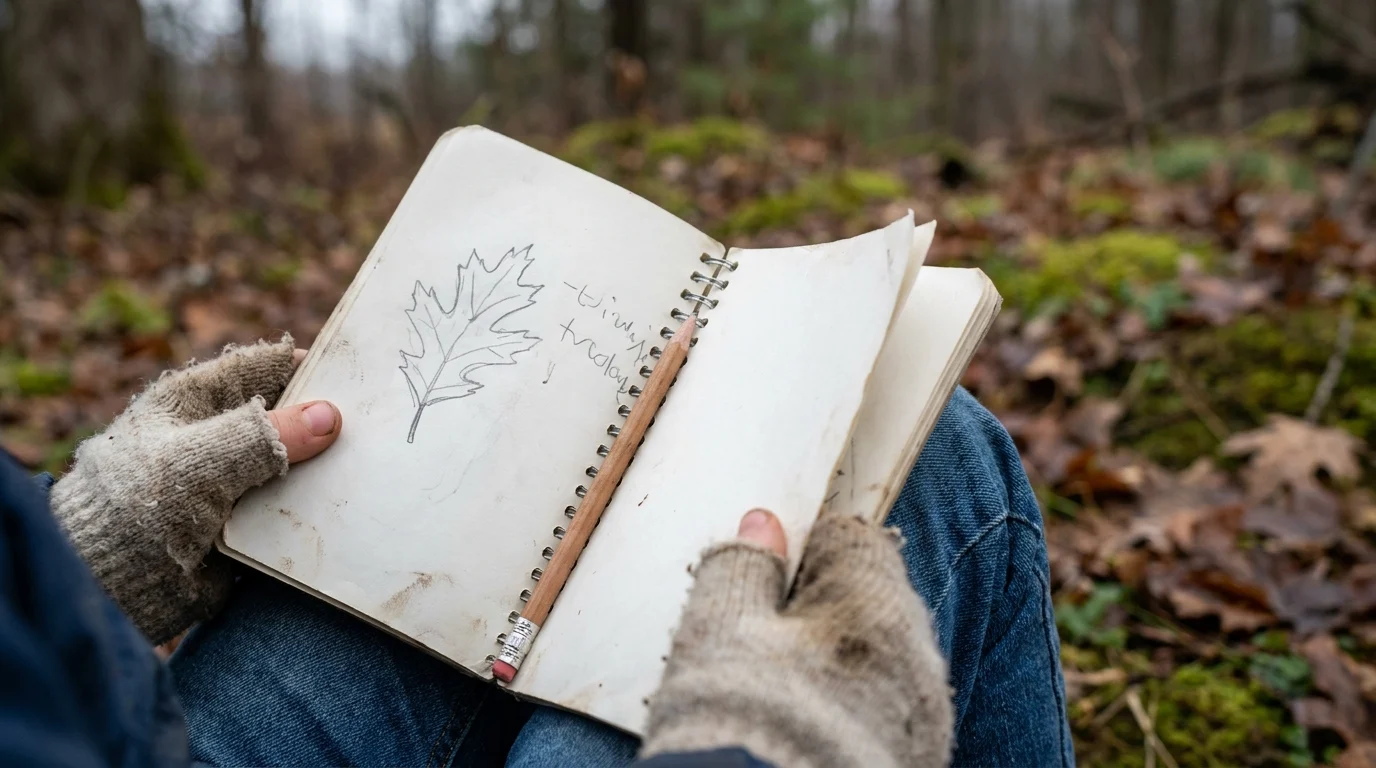
Students are outside every day. They sketch and keep nature journals, which is where the discipline lives: a dated entry, an honest drawing of what’s actually in front of you, notes on what you noticed and what you couldn’t explain. A journal is slower than a worksheet and considerably harder to fake.
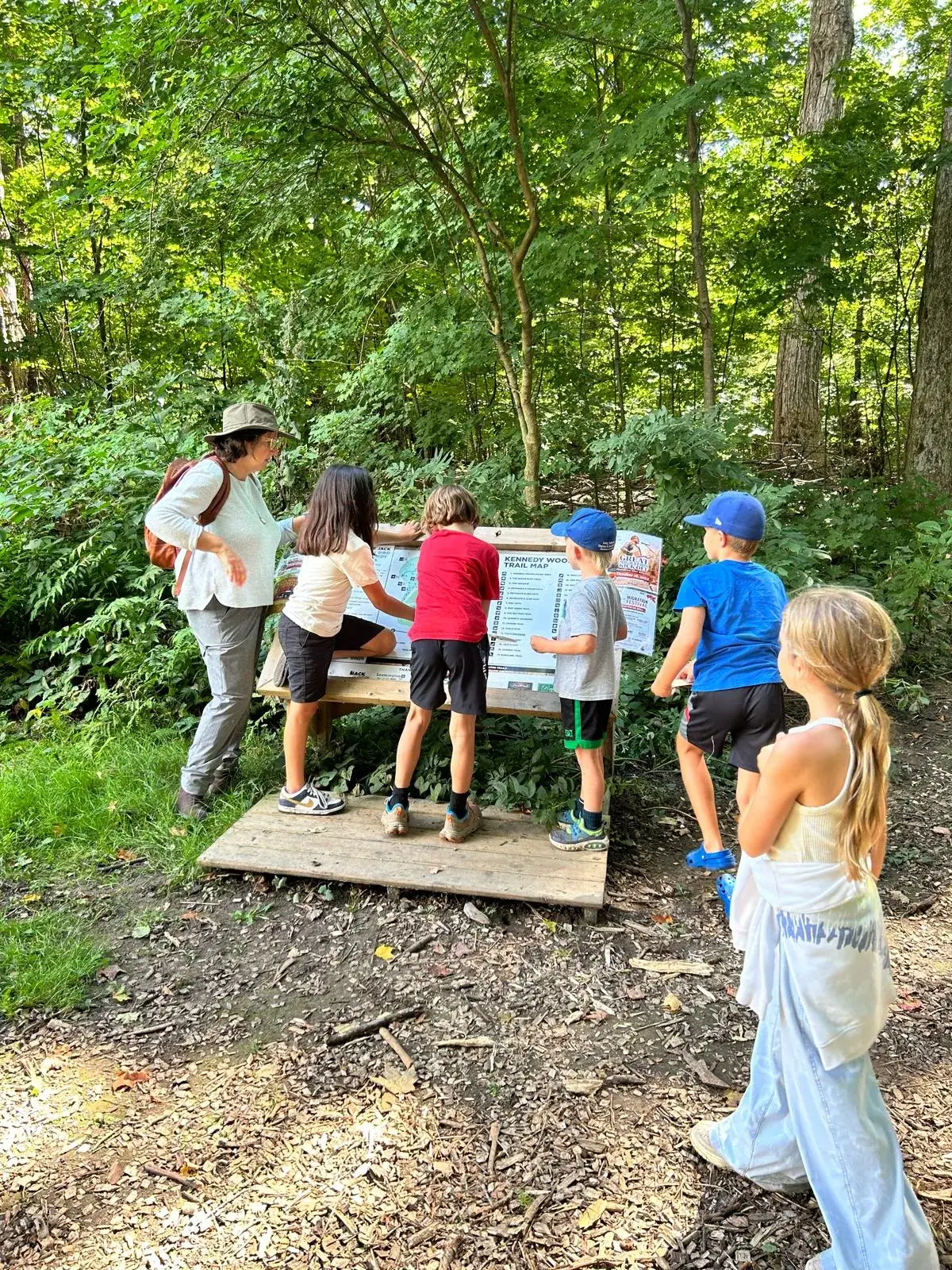
Every Thursday afternoon we run WONDERquests, taking learning past the schoolhouse doors to conservation areas, farms, museums and historic sites around Kingsville and Essex County.
The setting changes what’s possible. The Lake Erie shoreline, local parks, conservation areas and community gardens give our students a genuine range to work in across the seasons, and Essex County offers a lot within a short drive.
Then the children narrate. They tell back what they saw, out loud or in writing or through a drawing, in their own words. Mason held that “what a child digs for is his own possession,” and narration is where that ownership gets tested. A child who saw carelessly cannot narrate well, and both of you find that out immediately.
Our multi-age forms help here too. A seven-year-old watching a ten-year-old take a careful field sketch learns more about the standard than any instruction from a teacher would convey.
Why this isn’t a soft substitute for science
The worry we hear, and it’s a fair one, is whether this leaves children behind in real science.
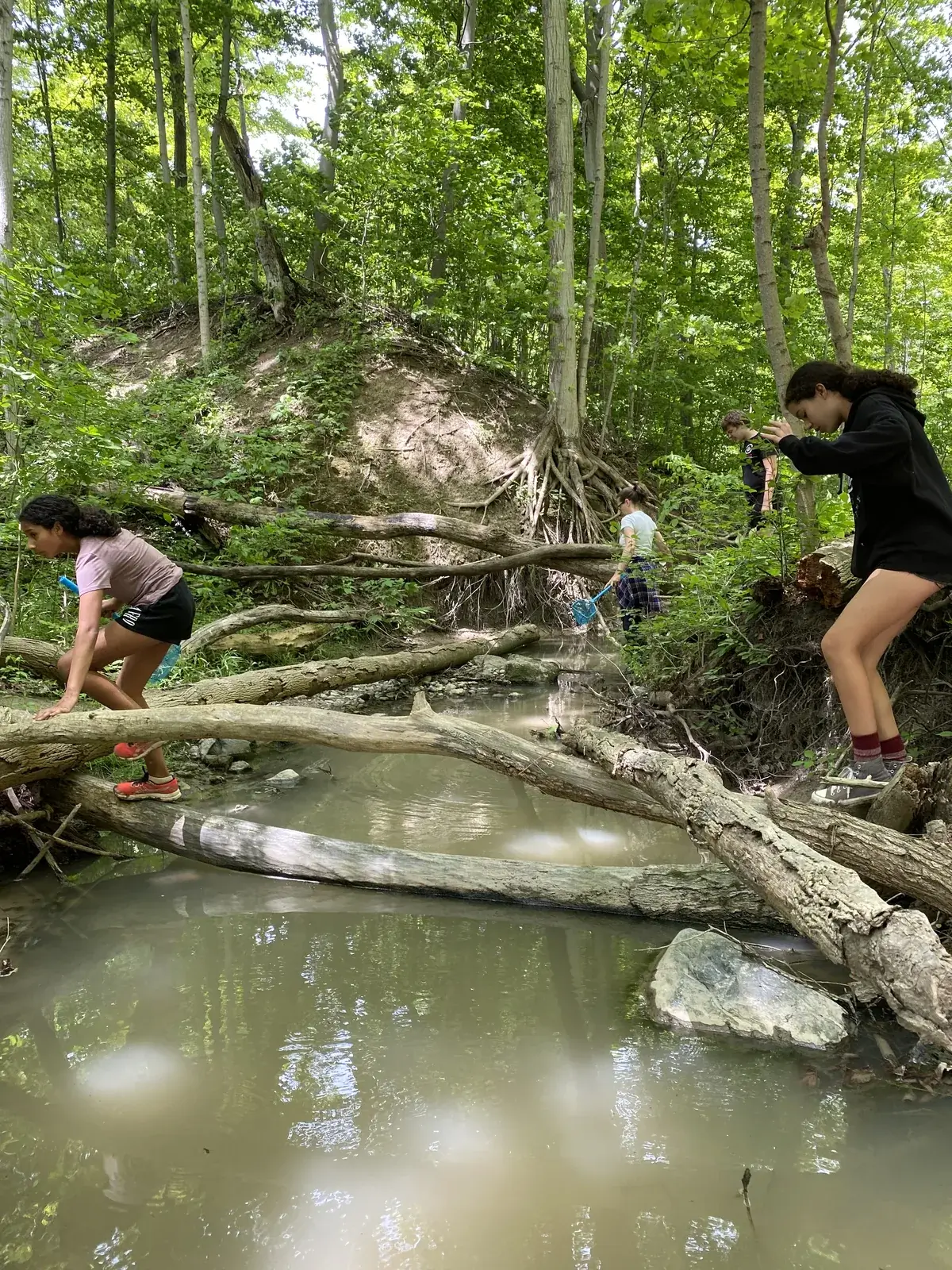
The order is the point. A student who has watched a pond through four seasons, drawn what changed, and recorded questions they couldn’t answer arrives at formal biology with something to attach the vocabulary to. Ecosystem, habitat, life cycle and adaptation stop being terms to memorize and start being names for things already observed.
Mason’s line was that “an observant child should be put in the way of things worth observing.” Attention is the skill being built. It transfers to every subject afterwards, and it’s difficult to teach later to a child who was never asked for it early.
The part we won’t pretend isn’t there
Mason’s framework is theological at its root, and nature study is where that shows most plainly. She wrote that “in the chief duty of man, his duty towards God, Nature is an exquisite instructor.”
WONDERfield is a Christian school. Bible is a timetabled subject, Morning Gathering includes hymns, and we teach nature study inside that understanding of the world. We’d rather say so directly than let a family discover it later.
We’d also say this: most of our families don’t attend a church, and they’re entirely at home here. Nothing about the way we teach assumes a child arrives with a faith background, and nobody is asked to perform one.
Read the fuller case
The clearest short treatment of why nature study earns its place is Sonya Shafer’s at Simply Charlotte Mason. She lays out eight distinct reasons, from the groundwork it provides for formal science through to what it builds in a child’s character, each rooted in Mason’s own writing.
8 Great Reasons To Do Nature Study, Sonya Shafer, Simply Charlotte Mason.
It’s written for parents teaching at home, so some of it addresses a setting different from ours. The reasoning carries across regardless, and a version of it is available as audio if you’d rather listen while driving.
If any of it makes you want to try a proper nature journal entry with your own child this weekend, that’s the best possible outcome. It costs a notebook, a pencil, and the patience to sit still somewhere for twenty minutes.
Ready to learn more about how WONDERfield Community School can nurture your child’s love of learning? We’d love to share more about our approach and answer your questions. Visit our contact page to schedule a school tour or chat with our team about your family’s educational journey.